What Is Agentic RAG? The Future of Intelligent AI Retrieval
Traditional Retrieval-Augmented Generation (RAG) has served AI systems well, but it comes with clear limitations. Static knowledge bases, rigid retrieval processes, and minimal adaptability make traditional RAG less effective for dynamic, real-time information needs.
Agentic RAG changes everything by introducing autonomous AI agents that can think, decide, and adapt — transforming how machines retrieve and process information.
🔍 How Traditional RAG Falls Short
Before diving into Agentic RAG, let's understand why its predecessor struggles:
- Limited flexibility: Fixed retrieval paths can't adapt to complex queries
- Static knowledge: Information quickly becomes outdated
- No decision-making: The system retrieves without evaluating relevance
- Poor context tracking: Short-term memory is often missing or weak
These gaps create frustration when AI systems miss critical context or return incomplete answers.
⚡ What Makes Agentic RAG Different?
Agentic RAG introduces intelligent agents into the retrieval process. Think of these agents as specialized assistants that:
- Analyze queries before acting
- Choose the best tools and strategies
- Refine search parameters dynamically
- Maintain context throughout the conversation
This shift from passive retrieval to active decision-making creates systems that feel genuinely intelligent.
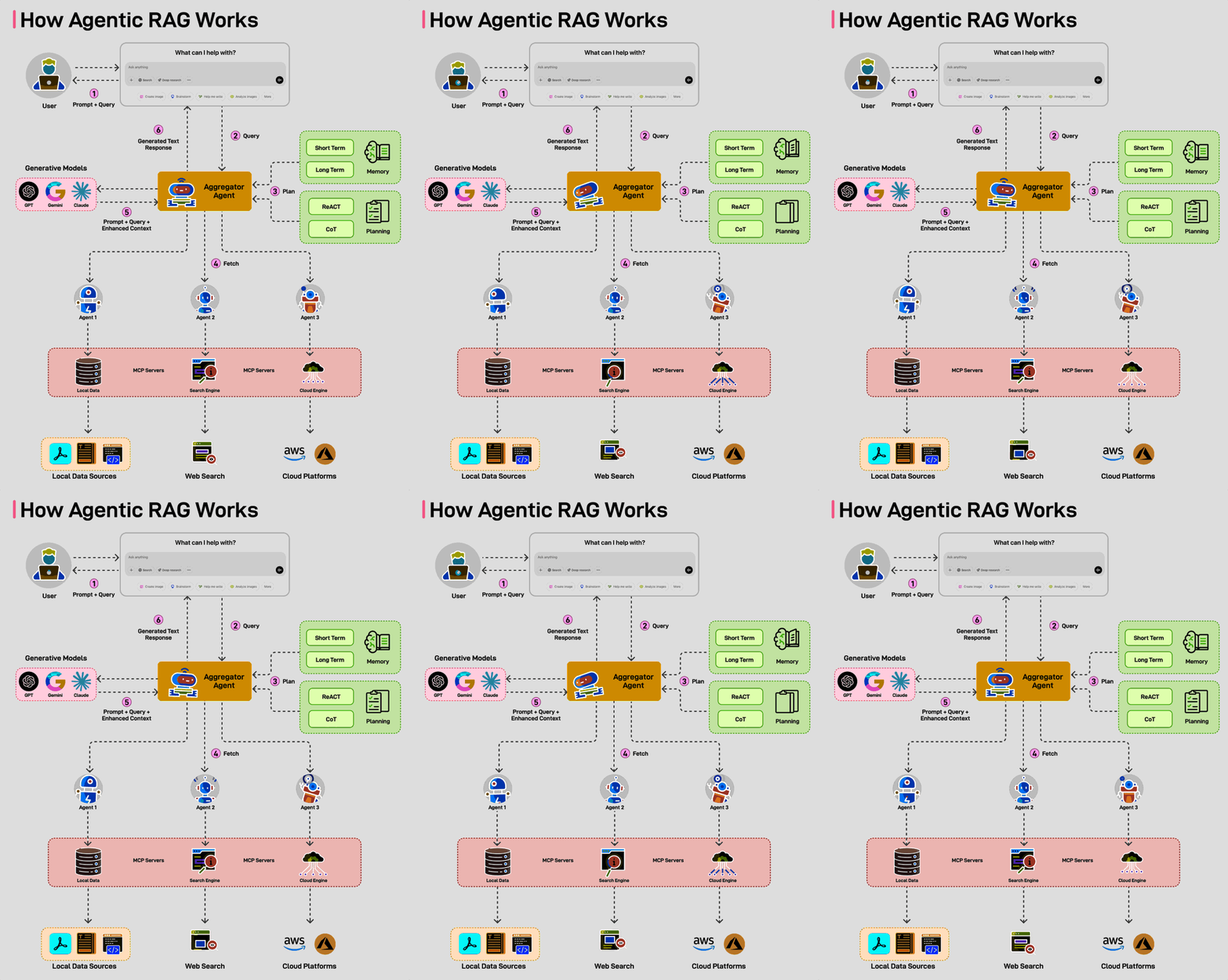
📊 How Agentic RAG Works: Step-by-Step
Step 1: Intelligent Query Processing
When a user submits a query, it doesn't go directly to a database. Instead, an AI agent receives and analyzes the request, determining what information is truly needed.
Step 2: Memory and Strategy Formation
The agent leverages two types of memory:
- Short-term memory: Tracks the current conversation's context
- Long-term memory: Accesses previously learned patterns and knowledge
Using these, the agent formulates an optimal retrieval strategy and selects appropriate tools.
Step 3: Multi-Tool Data Fetching
The agent deploys various tools to gather relevant data:
- Vector search for semantic matching
- Multiple specialized agents working in parallel
- MCP (Model Context Protocol) servers for external data access
- Knowledge bases across multiple sources
This multi-tool approach ensures comprehensive, relevant results.
Step 4: Intelligent Combination
The agent combines retrieved data with the original query and a carefully crafted system prompt, creating an optimized input package.
Step 5: LLM Processing and Response
The prepared input reaches the Language Model, which generates accurate, contextually relevant responses that feel natural and helpful.
🎯 Key Benefits of Agentic RAG
| Benefit | Impact | |---------|--------| | Dynamic Retrieval | Adapts search strategies in real-time | | Better Context | Maintains conversation flow and relevance | | Multi-Source Integration | Pulls data from diverse knowledge bases | | Reduced Hallucinations | Grounded responses from verified sources | | Scalable Intelligence | Handles complex queries without human intervention |
🏢 Real-World Applications
Agentic RAG powers innovative solutions across industries:
- Customer Support: Instant, accurate responses using multiple knowledge sources
- Healthcare: Real-time medical literature retrieval for diagnosis support
- Legal Research: Complex query handling across vast document databases
- Financial Services: Dynamic market data integration for informed decisions
🚀 Why Agentic RAG Matters
The difference between traditional RAG and Agentic RAG is the difference between a librarian who fetches books and a research expert who understands your needs, finds the right information, and synthesizes insights.
As AI continues evolving, systems must do more than retrieve — they must understand, decide, and adapt. Agentic RAG represents a crucial step toward truly intelligent AI systems that work alongside humans, not just for them.
The future of AI isn't just about larger models or more data. It's about smarter retrieval — and Agentic RAG is leading the way.