A feature is deployed, and the database queries run well. The team is happy with the results. However, six months later, the main table has grown from 50,000 rows to 5 million, and the same query now takes eight seconds.
Then, someone adds an index, and read latency drops to milliseconds, which seems like a clear win. But a week later, the nightly data import is running 40% slower than before. Fixing one problem created another.
This is the central challenge of database performance.
Every optimization helps one thing and can potentially hurt something else. The real challenge isn’t knowing the strategies, but understanding what each strategy costs and deciding which trade-offs a given application can afford. Below, we’ll explore the major strategies for improving database performance, breaking down their mechanisms, benefits, and hidden architectural costs.
1. Defining Your Performance Profile
Before you can apply a strategy, you must understand your system's unique requirements. The factors affecting performance—such as total dataset size, geographic distribution, and workload variability (peaks vs. troughs)—define your system's "Performance Profile."
The Hidden Cost: The cost here is not monetary, but informational. Failure to analyze these factors results in applying the wrong strategy, leading to complex, costly re-architecting later when the system collapses under load. A mismatch here is a architectural dead end.
2. Database Indexing: Fast Reads, Slow Writes
Indexing is the "go-to" first move for optimizing database reads. As the infographic illustrates, an index acts like a phone book, storing a sorted pointer (e.g., an email address and a physical row location). When you search by email, the database finds the pointer instantly instead of scanning the entire customer table.
Benefits: Drastically reduces read latency from seconds to milliseconds for indexed columns.
Hidden Costs:
- Reduced Write Speed: Every single INSERT, UPDATE, or DELETE on a table must now update not just the primary table, but every single index built on it. A heavily indexed table is slow to write to.
- Storage Overhead: Indexes are physical data structures. For a massive database, indices can grow to consume as much, or more, disk space than the actual data.
3. Denormalization: Simple Queries, Complex Consistency
Normalizing data means minimizing redundancy. Denormalization is the strategic act of intentionally re-introducing redundancy to speed up data retrieval. Instead of joining five tables at runtime to generate an invoice, you might copy the data and store a single, large "Customer_Orders" table.
Benefits: Significantly faster read performance by eliminating complex JOIN operations.
Hidden Costs:
- Data Consistency Risk: If you change a customer's address, you must now update it in the Customers table and in the denormalized Customer_Orders table. Failure leads to inconsistent data.
- Operational Complexity: You either need specialized application logic to handle double-updates or a background process (like materialized view refreshes) to keep the data in sync.
4. Locking & Concurrency: Data Integrity at the Cost of Latency
Multi-user environments use locking to manage concurrency and prevent race conditions. For example, two users shouldn't be able to buy the last inventory item at the exact same millisecond. Optimistic locking, shown in the image, checks if data has been modified (a version check) before committing an update.
Benefits: Ensures strict data integrity in high-traffic environments. Prevents data corruption and financial discrepancies.
Hidden Costs:
- Performance Bottleneck: Only one transaction can hold an exclusive lock at a time. Other users must wait. If conflicts are frequent, latency spikes as transactions queue up, waiting for locks.
- Deadlocks: If transaction A locks data X and wants Y, while B locks Y and wants X, they both wait forever. Handling these deadlocks requires specialized, often resource-intensive retry logic.
5. Database Replication: High Availability, But With Stale Data
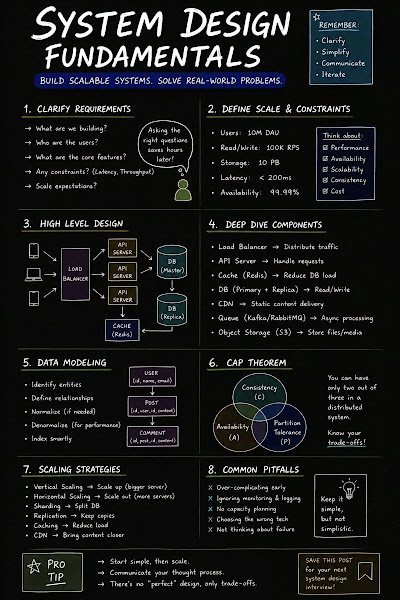
Replication copies data from a Leader Node (which handles both reads and writes) to multiple Follower Nodes (which handle read-only traffic). This is essential for scaling read-heavy applications and ensuring that if the leader crashes, the followers keep serving data.
Benefits: Improved read performance by distributing the load. Enables high availability (HA).
Hidden Costs:
- Replication Lag: It takes time for the update made on the leader to propogate to the follower. For a split second (or longer), a user reading from a follower will see the old data.
- Operational Expense: Managing multiple server nodes is complex and expensive. The architectural complexity of handling consistency when a leader fails is substantial.
6. Sharding (Horizontal Partitioning): Unlimited Scaling, Architectural Complexity
Sharding is the ultimate scaling strategy for massive datasets. You split your huge monolithic database into smaller, independent chunks (shards) based on a key (like geographic region). User data from the UK goes to Shard A; US data goes to Shard B.
Benefits: Allows a database to scale almost indefinitely, far beyond the limits of single-node hardware.
Hidden Costs:
- Extreme Application Complexity: The application logic must now know how to route every query to the correct shard.
- Joins Are Gone: Joining data across shards is functionally impossible (or catastrophically slow). The architecture forces a major shift in how you query and model data.
- Re-balancing: When one shard (e.g., the US) grows much larger than others, you must re-balance the shards—a complex, risky migration.
Summary: There Are No Solutions, Only Trade-offs
Database optimization is not about finding the perfect strategy. It’s about understanding your system’s Performance Profile and selecting the trade-off that aligns best with your needs.
Do you need extreme write speed? Limit your indexing. Do you need perfect data consistency and zero stale data? Stick to a single node and accept limited read performance. Every benefit has a hidden cost, and success in database performance management is the art of deciding which cost you are willing to pay.