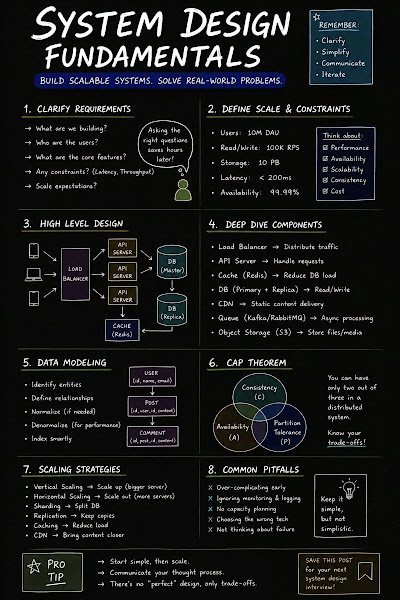
When building a software product, one of the most critical decisions an engineering team will make is choosing the right architecture. Pick the right one, and you scale effortlessly. Pick the wrong one, and you’ll drown in technical debt.
Today, we are breaking down the three dominant architectural styles: Monolithic, Microservices, and Serverless.
Here is what you need to know to make the right choice for your next project.
1. The Monolith: The "Old Reliable" 📦
A monolithic architecture consists of one codebase, one database, and one deployment pipeline.
The Pros: * Simplicity: For small teams and startups, this is often the fastest way to build, test, and ship. * Easy Debugging: Everything lives in one place, making tracking down bugs straightforward.
The Cons: * Scaling Bottlenecks: As the codebase grows, it becomes unwieldy. * High Risk: A tiny bug in a minor feature (like the shopping cart) requires redeploying the entire application—and one bad release can take down the whole system.
2. Microservices: The "Scalable Web" 🕸️
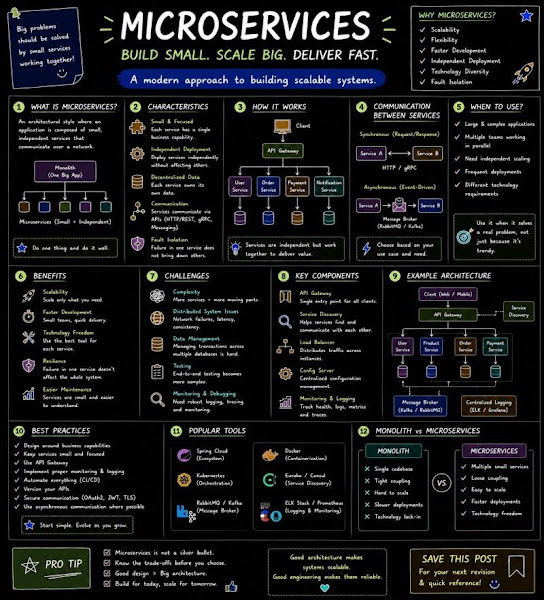
Microservices solve the monolith's scaling issues by breaking the system down into small, independent services (e.g., Product, Cart, Order).
The Pros: * Independent Scaling: Services run on their own, manage their own data, and scale separately. * Agility: You can ship an update to the Cart service without touching or risking the Product service.
The Cons: * Operational Complexity: You are now managing a distributed system. You need service discovery, distributed tracing, and complex request routing. * Data Consistency: Managing transactions across multiple independent databases is notoriously difficult.
3. Serverless: The "Event-Driven Future" ⚡
Serverless represents a total paradigm shift. Instead of provisioning or managing servers, you write individual functions that run only when triggered by specific events. The cloud provider handles all the scaling behind the scenes.
The Pros: * Zero Infrastructure Management: No servers to patch, update, or maintain. * Cost-Effective: You generally only pay for the exact compute time your functions use.
The Cons: * Cold Starts: Initializing a function that hasn't been used recently can introduce latency. * Vendor Lock-In: The more tightly you integrate with a specific cloud provider’s runtime (like AWS Lambda), the harder it becomes to migrate later.
The Verdict: It’s Rarely Just One ⚖️
In reality, most production systems don't rely purely on a single approach.
Many successful companies start with a Monolith at their core to validate their product quickly. Over time, as traffic grows, they spin out specific features into Microservices where they need independent scaling or faster deployment cycles. Serverless tends to show up later for things like background processing, event-driven tasks (like image resizing or sending emails), or handling highly unpredictable workloads.
Start simple, establish boundaries, and extract services only when the pain of the monolith outweighs the complexity of distributed systems.